
Funded Project
2023| Vermillion River Watershed
Restoring Function to a Metro Trout Stream: The Vermillion River Project
Contact
Applicant Organization: Friends of the Mississippi River
Contact: Alex Roth
Email: aroth@fmr.org
Project
The Vermillion River, a state‑designated cold‑water trout stream in the Twin Cities metropolitan area, has long held both ecological promise and vulnerability. Decades of agricultural land use left its uplands dominated by smooth brome, its wetlands choked by reed canary grass, and its riparian corridor overrun with invasive woody species. These conditions reduced vegetative diversity, increased sediment and nutrient loading, and threatened the stability and temperature regime necessary for sustaining trout and sensitive aquatic communities. Recognizing the need for intervention, the Minnesota Department of Natural Resources (MN DNR) acquired sixty‑two acres containing more than 7,000 feet of stream channel with the intention of restoring ecological function while improving public access.
From the beginning, DNR biologist Mark Nemeth understood that the scope and complexity of restoration required a broader collaborative framework. The agency partnered with Friends of the Mississippi River (FMR), bringing restoration capacity and a proven landowner outreach model, and the Hmong American Farmers Association (HAFA), whose adjacent farm and stewardship‑focused mission positioned them as crucial cultural and agricultural partners. This cross‑sector collaboration was strengthened through Fishers & Farmers Partnership funding, which enabled community engagement to begin well before the first treatments on the ground. A timing supported by research showing that early outreach increases adoption of conservation practices and reduces uncertainty among landowners.
Project Outcomes
The restoration strategy addressed the system holistically. In the riparian woodland, staff and contractors removed invasive shrubs and trees, then followed with repeated treatments to prevent resprouts before planting native shrubs, sedges, and wildflowers. These actions were designed to restore bank stability, improve shading, and increase leaf‑litter inputs to the stream, key drivers of water temperature moderation, and aquatic food‑web function. In the upland prairie, site preparation included multiple herbicide applications, a prescribed burn, and the introduction of a thirty‑species mesic prairie seed mix. This transition from shallow‑rooted monoculture to deep‑rooted native vegetation improves infiltration, reduces erosion, and enhances resilience to climate‑driven extremes of drought and flood. Simultaneously, FMR established “habitat islands” within eleven acres of reed canary grass‑dominated wetland, using flame treatments, herbicide, and aggressive native wetland seed mixes to jump‑start diversity in a system otherwise locked in a stagnant monoculture.
Monitoring & Research
Scientific monitoring formed the backbone of the project’s evaluation. The DNR implemented a multiyear schedule of standardized electrofishing assessments to measure trout abundance, species diversity, and Index of Biotic Integrity (IBI) scores, comparing the restored reach to a downstream control site with no recent restoration. Vegetation establishment is being measured using the LCCMR Restoration Evaluation Tool, which tracks percent of native vegetation and invasive species abundance to quantify habitat quality. These monitoring components ensure that the project’s ecological gains can be identified, documented, and adapted through time.

Outreach & Engagement
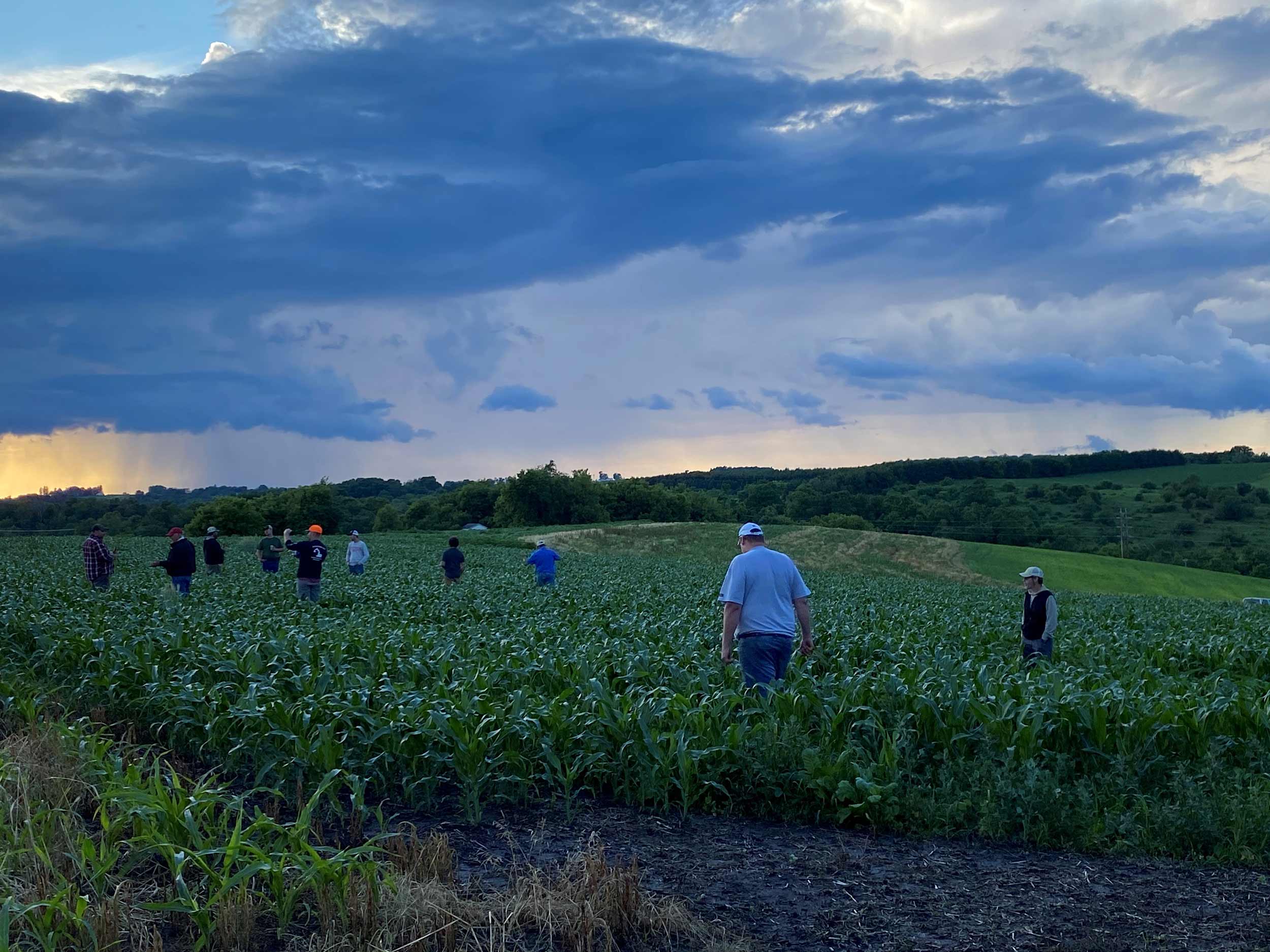
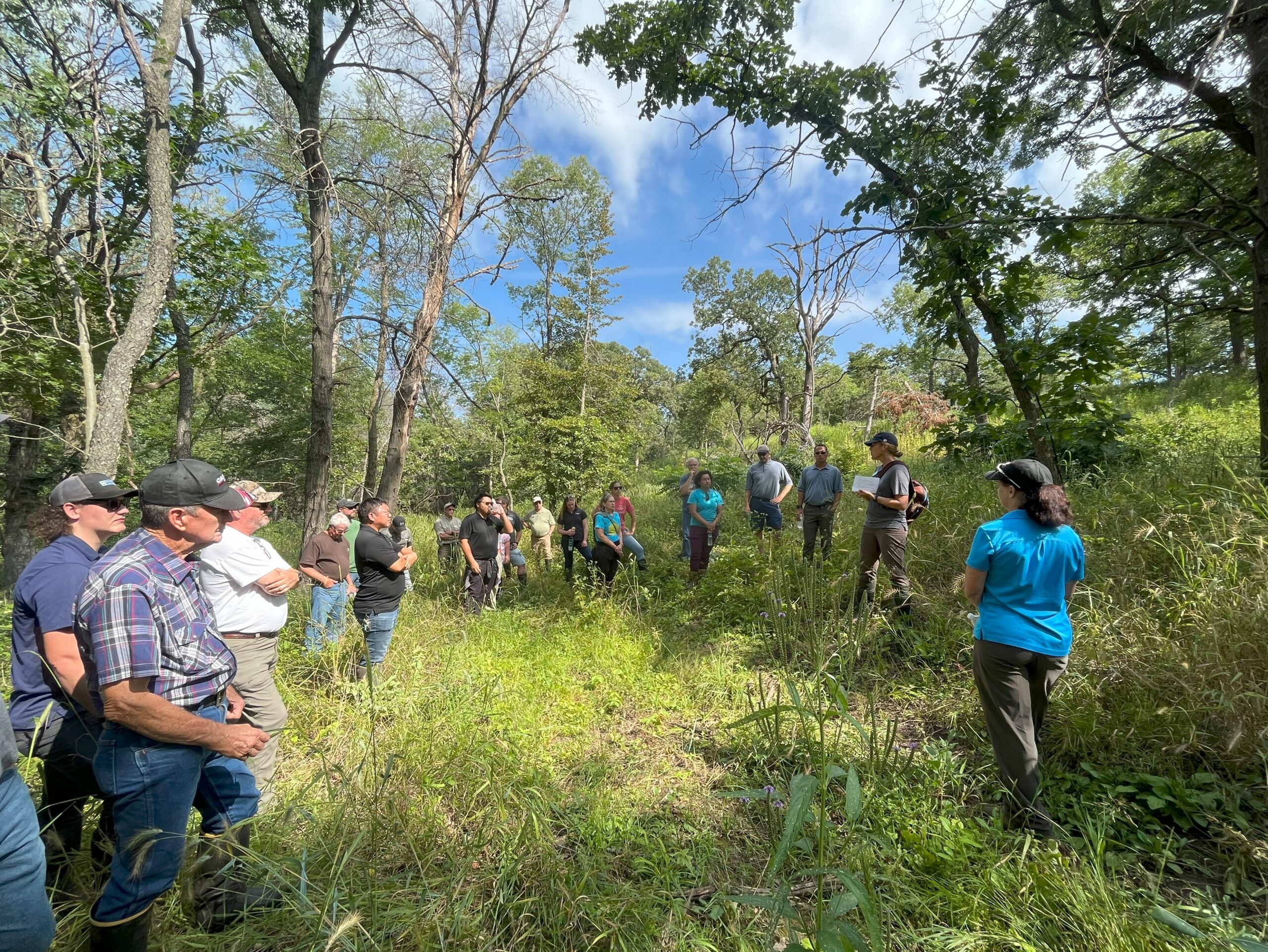
Landowner engagement was as integral to success as the treatments themselves. FMR contacted more than two dozen neighboring farmers and landowners, hosted a field day at the site, and provided one‑on‑one guidance about conservation options. This outreach not only increased community understanding of the restoration process but also led to more than a dozen landowners expressing interest in pursuing conservation practices on their own properties. Meanwhile, HAFA’s involvement brought cultural depth to the project, connecting restoration goals to a broader vision of intergenerational stewardship and the organization’s plan to evolve their farm into a learning center for sustainable agriculture and conservation education.
The success of this collaborative effort has already produced measurable ripple effects. The initial Fishers & Farmers‑supported project catalyzed the expansion of restoration activities across three additional Vermillion River Aquatic Management Area parcels, totaling more than one hundred acres now being restored or enhanced.
In a landscape where private agricultural lands interface directly with a sensitive cold‑water system, the Vermillion River project demonstrates the scientific merit and practical necessity of integrated restoration. By combining rigorous ecological management, coordinated monitoring, and culturally grounded engagement, MN DNR, FMR, and HAFA created a replicable model for watershed‑scale recovery. One where ecological outcomes and community stewardship advance together. The restored upland, riparian, and wetland habitats now function not only as improved ecological systems but also as a living classroom for landowners, farmers, anglers, and future generations who will inherit both the challenges and the promise of this river.