
Funded Project
2017 | Peno Creek Watershed
Contact
Applicant Organization: Missouri Department of Conservation
Contact: Chris Williamson
Email: christopher.williamson@mdc.mo.gov
Missouri Department of Conservation | Peno & Spencer Creek Cooperative Partnership
Through two Fishers & Farmers Partnership (FFP) grants, the Missouri Department of Conservation (MDC) partnered with private landowners to protect and enhance the Peno Creek Watershed and later expand conservation efforts into the adjacent Spencer Creek Watershed, two of the highest‑quality stream systems in northeast Missouri’s Salt River Basin.
These FFP‑supported projects focused on voluntary, producer‑led conservation that improves soil health, reduces sediment and nutrient runoff, and protects aquatic and riparian habitat, while maintaining the economic viability of working farms. Together, the investments helped establish a durable, watershed‑scale conservation framework grounded in landowner leadership, demonstration, and long‑term monitoring.
Conservation Need
Peno Creek and Spencer Creek lie within Missouri’s Ozark Border region and support diverse aquatic communities, including smallmouth bass, rock bass, and multiple darter and shiner species. The watersheds also contain biologically significant riparian corridors, karst features, and habitat used by federally listed bat species, making proactive conservation especially important.
While both watersheds retained high ecological value, MDC identified emerging risks associated with row‑crop agriculture, livestock access to streams, riparian degradation, and sediment and nutrient runoff. Addressing these challenges required early, collaborative action to prevent degradation rather than restore lost function; an approach well aligned with Fishers & Farmers Partnership goals.

An Action Plan with Landowners in the Lead
FFP funding enabled MDC to engage landowners directly and implement best management practices (BMPs) that benefit both farms and fisheries. Across the grant periods, the partnership supported:
- Cover Crop Adoption at Scale
- 38 producers planted more than 1,900 acres of cover crops through a seed cost‑share program.
- An additional 2,300+ acres were planted across the Peno and Spencer Creek watersheds through a reimbursement‑based cost‑share model.
- Stream‑Friendly Livestock and Riparian Practices
Landowners installed alternative watering systems, riparian fencing, stabilized stream crossings, and tree plantings, reducing erosion, protecting streambanks, and limiting direct livestock impacts. - Demonstration and Outreach
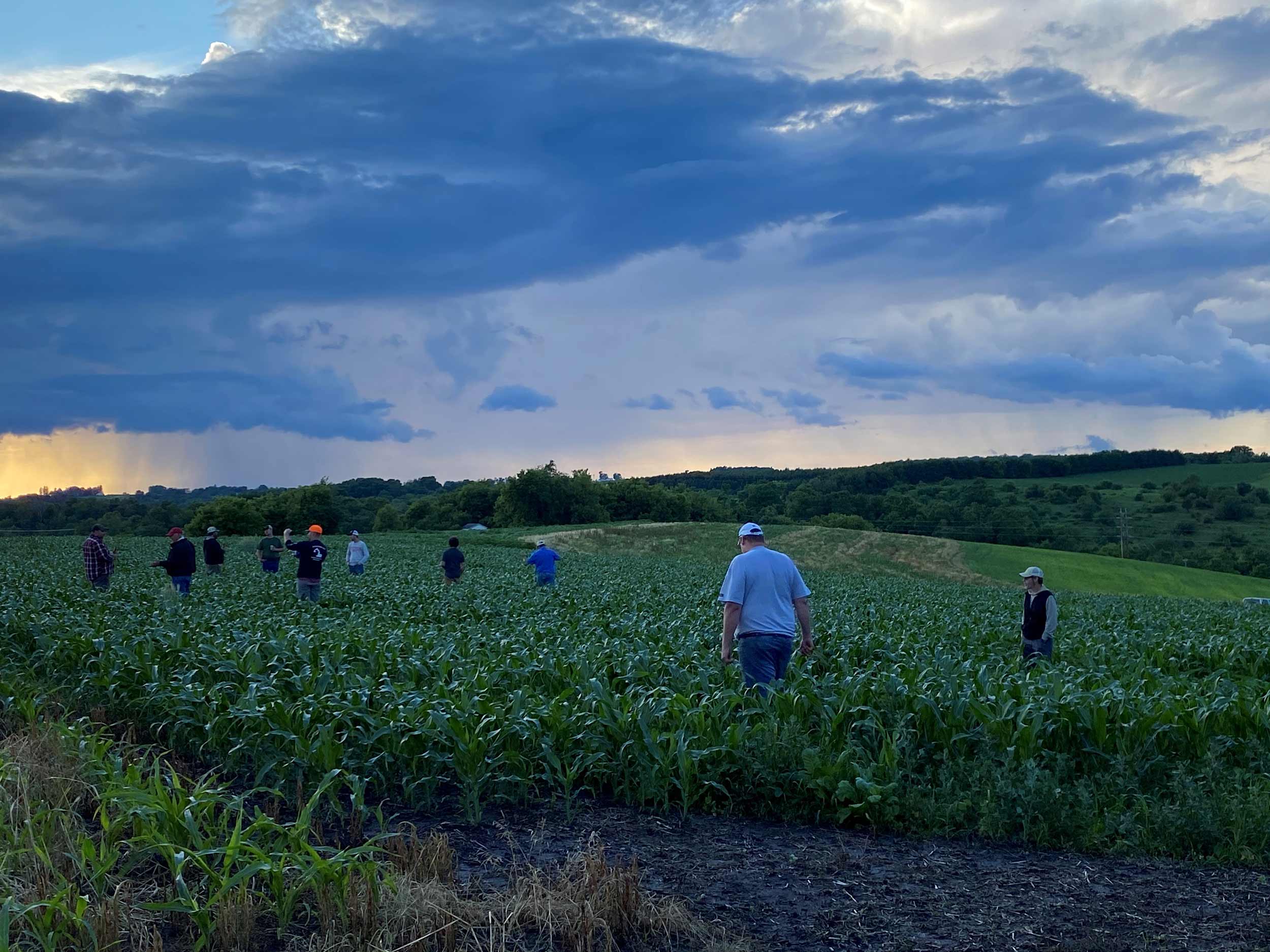
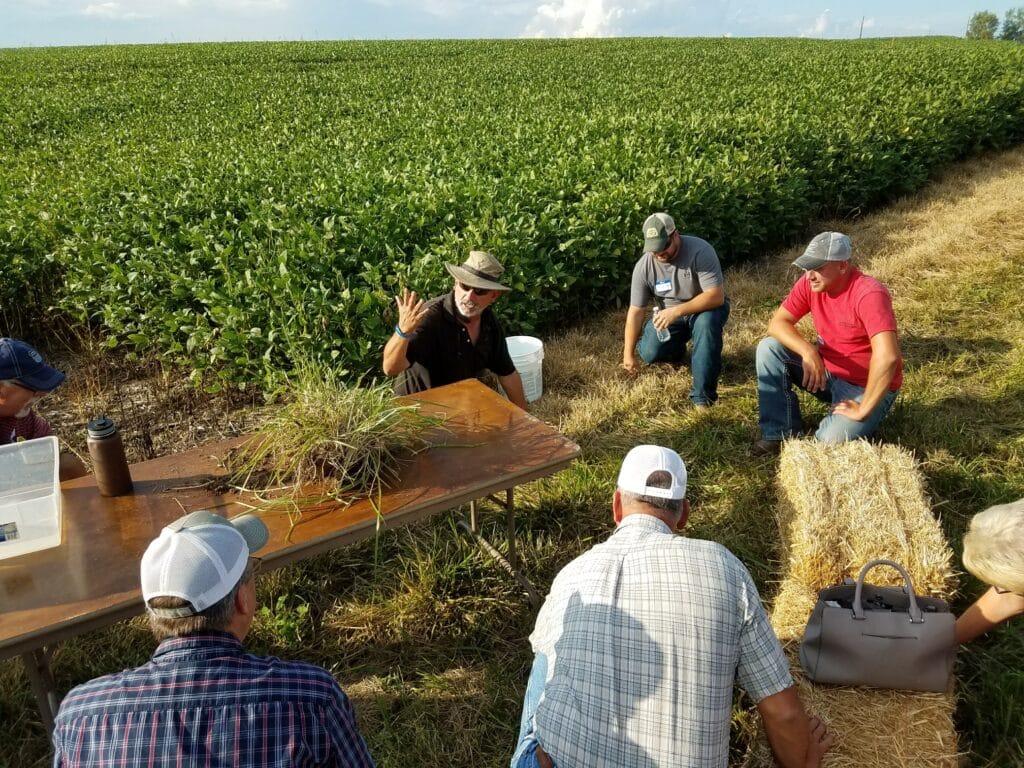
MDC established demonstration plots on both public lands (Ranacker Conservation Area) and private farms and hosted field days and farm tours that allowed producers to learn from neighbors and see conservation practices working in real conditions. - Landowner Advisory Leadership
A small, farmer‑led advisory council helped guide priorities, refine outreach, and promote peer‑to‑peer learning, ensuring conservation strategies reflected local realities and producer needs.
Leadership from John and Sandy Scherder, their family, and neighboring producers proved essential to the project’s success. Early adopters of no‑till, cover crops, and managed grazing; the Scherders demonstrated how conservation practices could improve soil structure, water infiltration, and resilience, while supporting profitable farm operations.
Their willingness to host demonstrations, share data, and mentor neighbors accelerated practice adoption throughout the watershed. Over time, participating farms reported increased soil organic matter, reduced erosion, and improved water quality, reinforcing confidence in the conservation approach. The Scherder family’s stewardship was
later recognized with the 2018 Aldo Leopold Conservation Award, reflecting the lasting impact of this work.
Outcomes and Impact
FFP investments in the Peno and Spencer Creek watersheds resulted in:
- Widespread adoption of cover crops and reduced tillage across thousands of acres
- Improved riparian condition and reduced sediment delivery to high‑quality streams
- Protection and enhancement of habitat supporting diverse fish and aquatic species
- Stronger collaboration among MDC, NRCS, local conservation districts, and landowners
- A replicable model for farmer‑led watershed conservation
Importantly, the projects emphasized prevention, monitoring, and long‑term stewardship, supported by MDC’s Resource Assessment Monitoring (RAM) protocol and future stream surveys.
The Peno & Spencer Creek Cooperative Partnership demonstrates how modest, well‑targeted investments can yield outsized benefits when conservation is producer‑driven and place‑based. By aligning agricultural practices with ecological priorities, the Fishers & Farmers Partnership helped safeguard biologically significant streams while strengthening the social infrastructure needed for sustained conservation success.
Looking Ahead
MDC continues to prioritize the Peno Creek Watershed as a Tier 2 conservation area under its Comprehensive Conservation Strategy, offering enhanced technical and financial support to landowners. Conservation practices initiated through FFP funding continue to expand organically, even as formal watershed groups evolve.
Future plans include ongoing BMP implementation, expanded monitoring, and scheduled aquatic community surveys, ensuring that progress can be measured and shared. The legacy of the Fishers & Farmers Partnership investments lives on through healthier soils, protected streams, and a new generation of producers committed to stewarding the watershed.
