
Funded Project
2017 | Boone River Watershed
FY17 | Restoring Habitat, Engaging Communities
Location: Boone River Watershed, Iowa (Wright, Hamilton, Humboldt, Kossuth, Hancock Counties)
Partners: The Nature Conservancy, Iowa DNR, Iowa State University, Wright County SWCD, USFWS
Project Lead: Karen Wilke, The Nature Conservancy
Oxbow Restoration & Conservation Outreach
Over the past century, oxbow habitats in the Boone River Watershed were lost or degraded due to sedimentation, stream channelization, and agricultural runoff. These changes disconnected oxbows from their streams, reducing habitat for native fish like the Topeka shiner, and limiting the watershed’s ability to store water and filter nutrients.
Originally designed to restore two smaller oxbows, the project pivoted to restore one large oxbow—the Mrazek North West Oxbow—which provided equivalent ecological benefits. Located along Otter Creek in Wright County, the oxbow was restored in May 2019 and now provides 1.5 acres of aquatic habitat.
The surrounding land was planted with native vegetation, enhancing habitat for pollinators and birds. The oxbow is fed by two tile outlets and is estimated to remove 42% of incoming nitrates, improving water quality downstream.
Project Outcomes
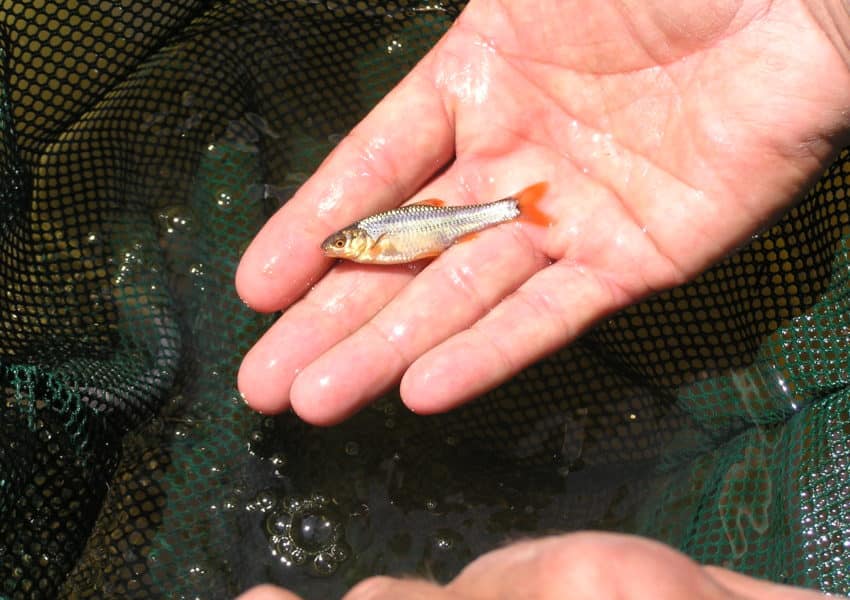
The restoration of the Mrazek North West Oxbow in 2019 created 1.5 acres of high-quality aquatic habitat in the Boone River Watershed. Post-restoration fish surveys recorded 5,383 fish representing 11 species, including the federally endangered Topeka shiner, confirming the oxbow’s value as critical habitat. The site also demonstrated strong water quality benefits, with an estimated 42% reduction in nitrates from tile-fed inflows.
This project contributed to the broader success of the Boone River Watershed initiative, which has now restored 28 oxbows, creating over 13 acres of aquatic habitat. These efforts advanced the goals of the Mississippi River Basin Initiative and Iowa’s Nutrient Reduction Strategy, while supporting habitat for Species of Greatest Conservation Need. The restored oxbow now serves as a model for large-scale restoration and nutrient reduction in agricultural landscapes, showcasing how conservation and farming can work hand in hand.
Agricultural & Community Engagement
The project emphasized outreach and education to promote conservation practices that align with productive farming:
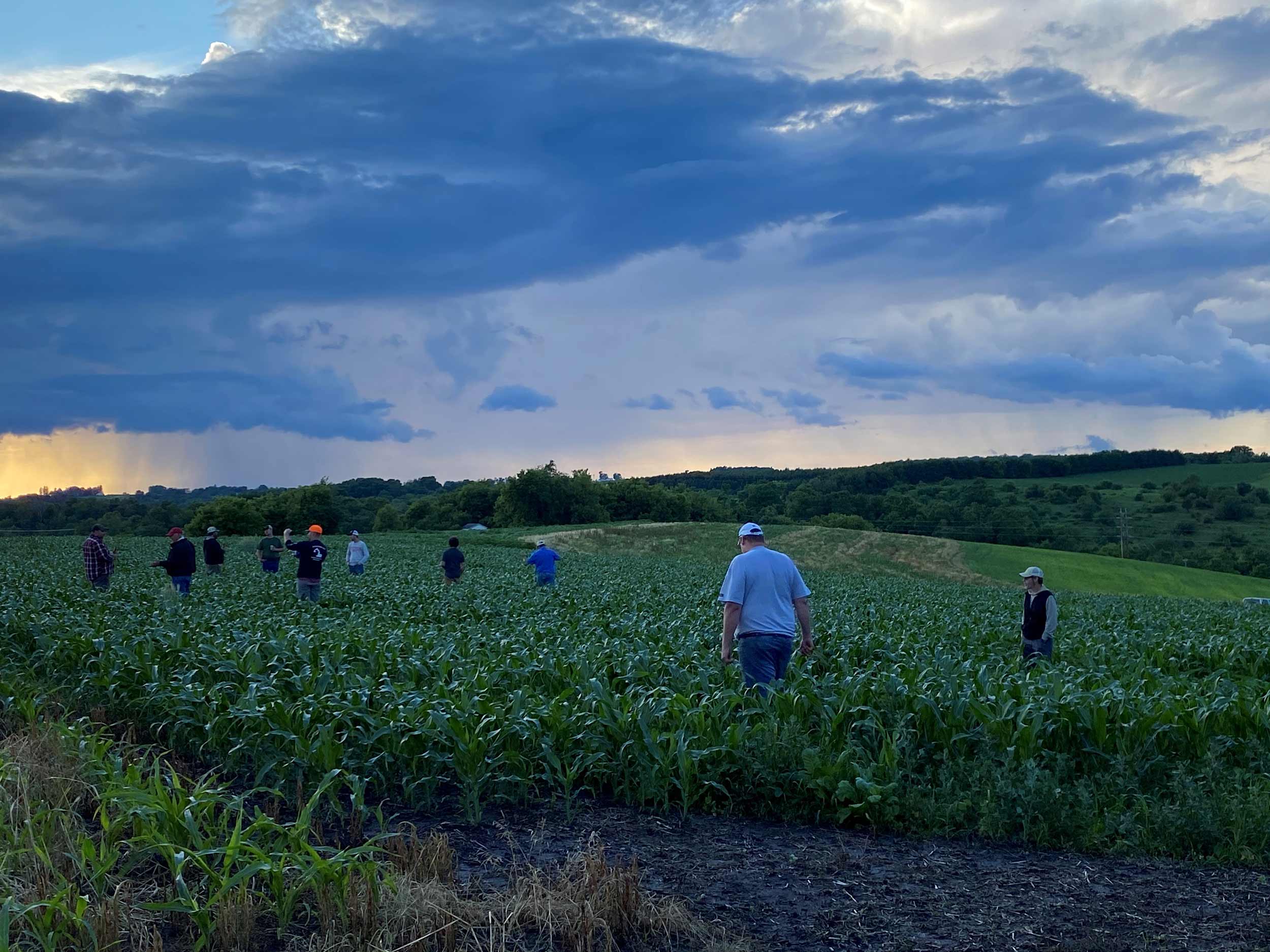
- Two field days were hosted in 2018, drawing over 100 attendees to learn about oxbows, nutrient management, and soil health.
- Two newsletters were mailed to 637 local landowners and distributed at NRCS offices.
- Ongoing outreach included social media, one-on-one technical assistance, and conservation articles.
Monitoring & Research
- Iowa State University conducted three fish surveys at the restored oxbow in 2019.
- Long-term monitoring across the watershed showed oxbows support 30 fish species, 54 bird species, and remove significant nutrient loads.
- Real-time nitrate sensors and groundwater monitoring helped quantify water quality and storage benefits.
“This project shows how one large oxbow can deliver outsized benefits for fish, water quality, and community engagement.”
— Karen Wilke, The Nature Conservancy