
Funded Project
2015 | Boone River Watershed
FY15 | Restoring Habitat, Improving Water
Location: Boone River Watershed, Iowa (Wright, Hamilton, Humboldt, Kossuth, Hancock Counties)
Partners: The Nature Conservancy, Iowa DNR, U.S. Fish & Wildlife Service, Iowa Soybean Association
Project Lead: Karen Wilke, The Nature Conservancy
Habitat & Water Quality Improvement
The Boone River Watershed had lost much of its off-channel oxbow habitat due to sedimentation, stream channelization, and agricultural runoff. These changes degraded water quality and fragmented critical habitat for native fish, including the federally endangered Topeka shiner.
This project built on over a decade of conservation work in the watershed. Between 2016 and 2019, the team:
- Restored 7 oxbows (exceeding the goal of 6)
- Planted 186 acres of cover crops (exceeding the goal of 175 acres)
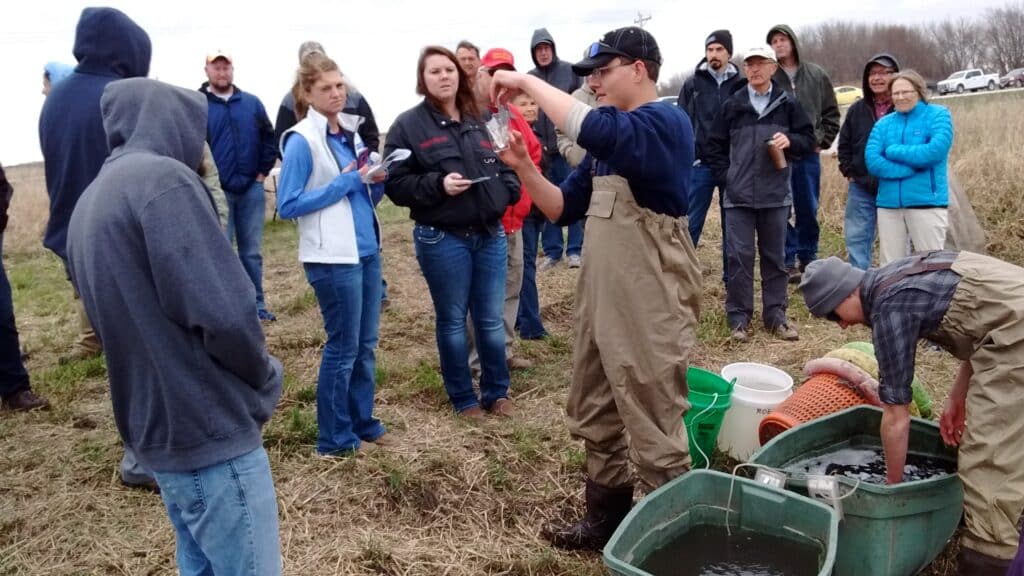
- Conducted 6 fish surveys (tripling the original goal)
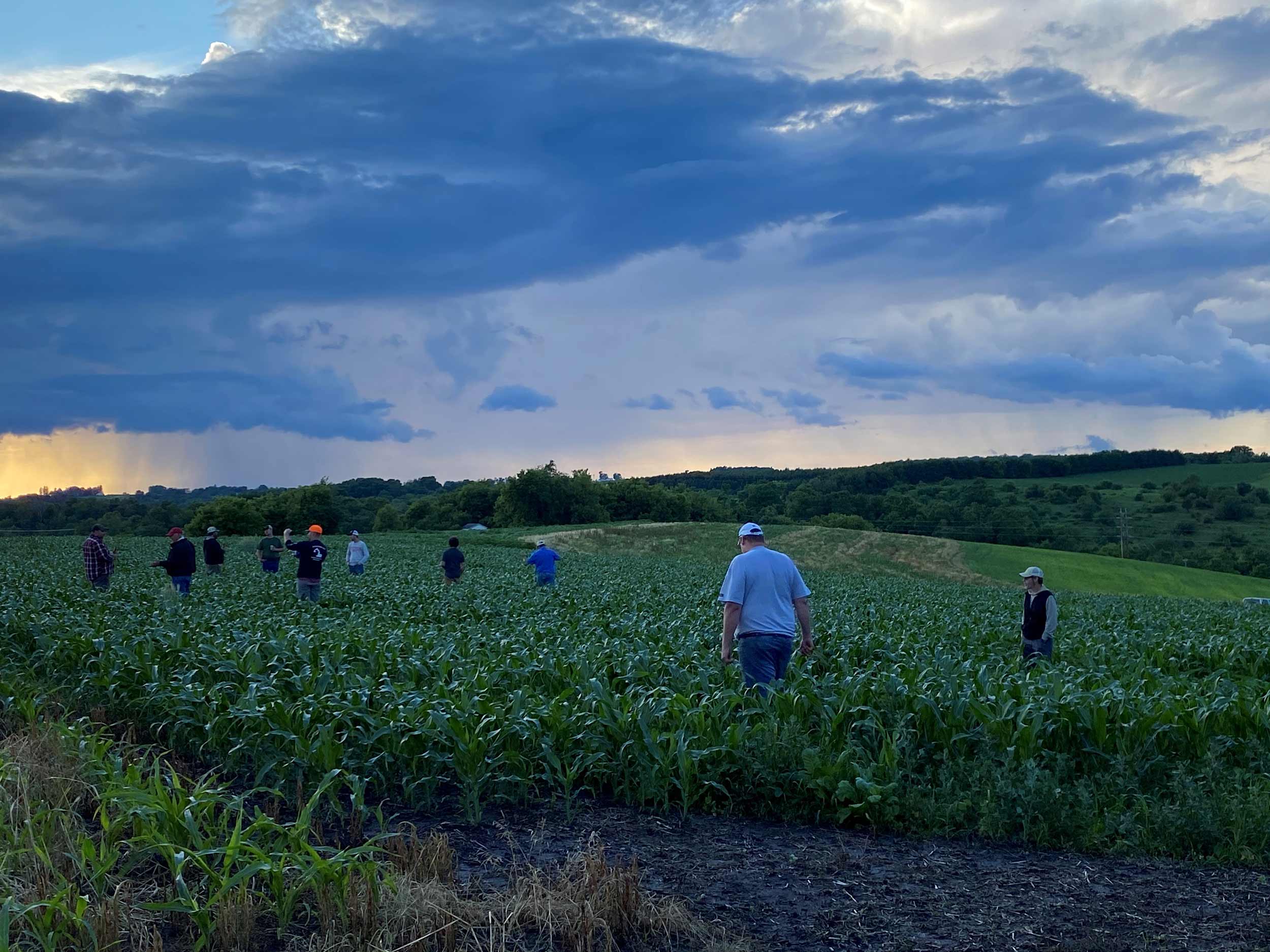
- Hosted 6 field days and distributed 4 newsletters to engage and educate local landowners
The restored oxbows created over 2 acres of aquatic habitat and supported a wide range of native fish species. Highlights include:
- Topeka shiner populations were confirmed in 3 of the 5 monitored oxbows.
- The Hefty South oxbow supported over 11,500 fish from 19 species.
- The McClellan oxbow hosted 3,172 fish from 21 species, including 318 Topeka shiners.
- Oxbows removed an average of 42% of nitrates from tile-drained water, improving downstream water quality.
The use of cover crops throughout the Boone River Watershed significantly improved soil health, reduced erosion, and enhanced water infiltration. Farmers participating in the project aerially seeded cereal rye, which provided essential ground cover during the winter and continued to grow in the spring, offering ongoing soil protection and nutrient retention. These practices not only supported environmental goals but also demonstrated that conservation strategies can be successfully integrated into productive agricultural systems, benefiting both the land and the livelihoods of those who farm it.
Community Engagement
- Field days drew dozens of farmers and landowners to learn about oxbows, cover crops, and cost-share opportunities.
- Newsletters reached over 600 local stakeholders.
- Outreach extended to presentations at Iowa Project AWARE, ISU field days, and conservation conferences.
Monitoring & Research
- Fish surveys were conducted by Iowa DNR, USFWS, and Iowa State University.
- Water quality monitoring included biweekly sampling for nitrates, phosphates, and other nutrients.
- Bird surveys by Audubon Society found 54 bird species using restored oxbows—7 of which would not have been present without restoration.
- Real-time nitrate sensors and groundwater loggers helped quantify oxbows’ water storage and filtration benefits.