
Funded Project
2013 | Bourbeuse / Meramec River Watershed
Bourbeuse & Meramec Watersheds: Where Collaboration Shaped a Partnership
Project Overview
The Bourbeuse and Meramec Rivers of east‑central Missouri are more than waterways—they are working landscapes, home to generations of family farms that depend on healthy soil, clean water, and resilient ecosystems. In the early 2000s, conservation staff from the Missouri Department of Conservation (MDC) began collaborating with local landowners who shared a concern: streambanks were eroding, cattle relied on direct stream access, and tree cover along riparian corridors was declining.
The result was the formation of the Lower Bourbeuse Conservation Opportunity Area (LBCOA) Landowner Committee, a grassroots group of producers committed to improving their land and waterways. This landowner‑led structure became the foundation for what would later influence—and define—the emerging Fishers & Farmers Partnership (FFP).
Locally-Led Conservation at Its Best
Before the committee existed, MDC staff had direct working relationships with only a handful of landowners in the watershed. But once producers were invited to help identify their own priorities, participation grew quickly and meaningfully. Landowners highlighted two pressing needs:
- Alternative watering systems so cattle no longer relied on streams
- More trees along streambanks to stabilize banks and improve habitat
With this clarity, MDC and landowners co‑designed a program that worked for farms—not just for natural resources. The approach was simple but powerful: practical solutions, fair cost‑share, and respectful partnership.
As one MDC biologist reflected, “We asked landowners what they needed. And then we built the program around that.” Landowners noticed. One producer said the program worked because it offered “the right products at the right price—without the hassle.”

Where Fishers & Farmers Found Its Identity
When the Fishers & Farmers Partnership was formed, its founders were searching for a conservation model rooted in trust, shared leadership, and locally defined goals. They didn’t have to look far. The LBCOA and the Bourbeuse/Meramec landowner network offered a living example of what successful partnership could look like.
In 2009, before FFP was even formally recognized as a National Fish Habitat Partnership, the Bourbeuse/Meramec watershed became the site of its first funded project. The fit was natural:
- A strong, organized landowner committee already existed
- MDC and Ozark Land Trust had long-term relationships with those landowners
- The watershed needed cost‑share support to implement practices that were otherwise financially out of reach
The early success of the Missouri work helped shape FFP’s identity as a truly landowner‑centered model—one that improves both farm operations and fish habitat. The lessons from this watershed set the tone for national workshops, future funding strategies, and FFP’s commitment to trust‑building.
As FFP co‑founder Nancy North reflected, the Missouri project “showed what’s possible when landowners aren’t just invited to the table—they’re leading the conversation.”

Practices That Improve Land and Water
With FFP support and partner guidance, landowners in the watershed implemented projects that improved efficiency, reduced erosion, and restored natural habitat. These included:
- Riparian corridor fencing to exclude cattle from streambanks
- Tree planting to establish or expand riparian buffers
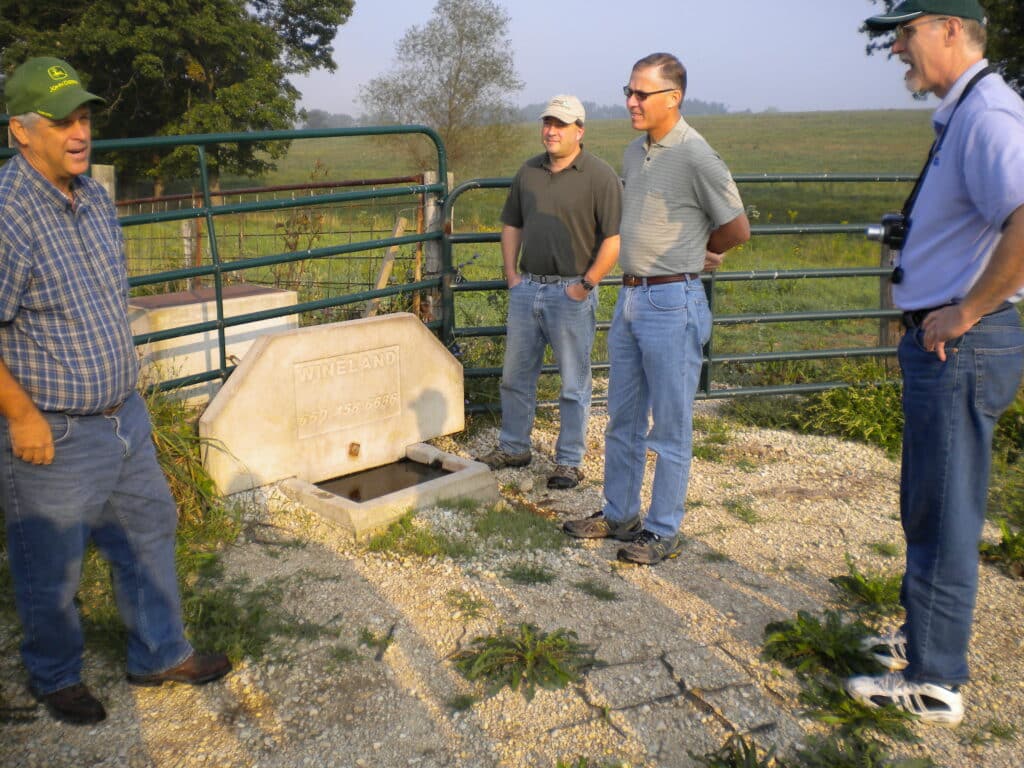
- Alternative watering systems to support planned grazing
- Native vegetation restoration for long-term soil and water benefits
Over 35 miles of riparian corridor fencing and hundreds of acres of protected streambank vegetation were installed through landowner‑driven projects. Producers report healthier pastures, better water distribution, and improved herd management—proof that conservation and profitable agriculture can go hand in hand.
Cattleman Herman Merkel put it simply: “If you leave a stream alone, it will repair itself. It’s nice to see it come back.”
Partnership in Action
The success of the Bourbeuse/Meramec work comes from longstanding relationships. MDC staff didn’t just visit once—they worked with landowners year after year. Ozark Land Trust brought technical expertise and stewardship support. FFP contributions made high‑impact projects financially feasible.
This project demonstrates the power of:
- Trust built over time
- Shared decision‑making
- Programs designed with—not for—landowners
- Collaborative funding and flexible solutions
As one landowner explained, “The program went fast and smooth—without 10,000 pages of paperwork.” For many, the experience redefined what conservation could feel like.
Impact That Lasts
Over nearly two decades, the Bourbeuse and Meramec watersheds have seen tangible improvements:
- Streambanks stabilized
- Riparian corridors grown and protected
- Wildlife and fish habitat restored
- Farm operations strengthened
- A community of conservation‑minded producers formed
Perhaps most importantly, the relationships forged here helped guide the vision, values, and identity of the Fishers & Farmers Partnership. The Missouri work proved that real change happens when conservationists and farmers lead together—and when success is measured not only by habitat restored but also by trust earned.
Looking Forward
Today, the practices pioneered in this watershed continue to inform FFP’s work across the Upper Mississippi River Basin. Missouri partners, including the MDC, are now part of a broader strategic initiative to highlight success stories in stream-focused conservation. The story of the Bourbeuse and Meramec Rivers remains one of the clearest examples of what becomes possible when landowners sit at the table as leaders.
As one landowner offered to newcomers: “If you want to improve your land, sit down, listen, and get the information. The right partners will help you make an informed decision.”
This watershed didn’t just benefit from the Fishers & Farmers Partnership.
It helped define it.
