Funded Project
Boone River Watershed
A Decade of Restoration: Transforming the Boone River Watershed
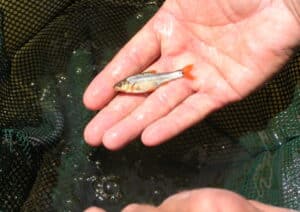
For over a decade, the Boone River Watershed in north-central Iowa has been the focus of a remarkable conservation journey—one that has restored habitat, improved water quality, and brought together a powerful coalition of partners. At the heart of this effort is a small, shimmering fish: the Topeka Shiner, a federally and state-endangered minnow whose presence signals a healthy river ecosystem.
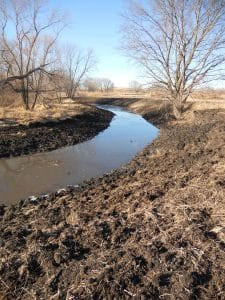
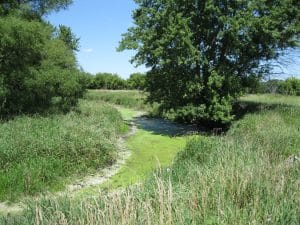
Since 2011, The Nature Conservancy (TNC), in collaboration with the Fishers & Farmers Partnership (FFP) and a wide network of local, state, and national partners, has restored 60 oxbows, with 25 more lined up for 2024. These u-shaped river meanders—once cut off from their streams and filled with sediment—have been brought back to life, creating vibrant aquatic habitats and natural water filters across the landscape.

Building a Model for Success
The Boone River oxbow program began with a vision: restore critical habitat for the Topeka Shiner while improving water quality and flood resilience. With initial funding from FFP, the program took root and quickly demonstrated success. That early investment became a catalyst, allowing TNC to leverage additional funding from the Iowa Department of Agriculture and Land Stewardship (IDALS) , the Iowa Soybean Association, NRCS (RCPP), and private partners like Microsoft, Coca-Cola Foundation, and Apex Clean Energy.
Over time, the program evolved into a proof of concept—a replicable model for conservation that has now expanded across Iowa and beyond. The creation of the Oxbow Restoration Toolkit, the inclusion of oxbows in the Iowa Nutrient Reduction Strategy, and the development of a statewide training program for conservation professionals are just a few of the legacies of this work.
A Partnership-Driven Approach
The Boone River Watershed effort is a shining example of what’s possible when diverse partners unite around a shared goal. Key collaborators include:
- Fishers & Farmers Partnership
- U.S. Fish and Wildlife Service
- Iowa Soybean Association
- Soil and Water Conservation Districts
- NRCS and IDALS
- Iowa DNR and Iowa Geological Survey
- Iowa State University and University of Iowa IIHR
- Local landowners and farmers
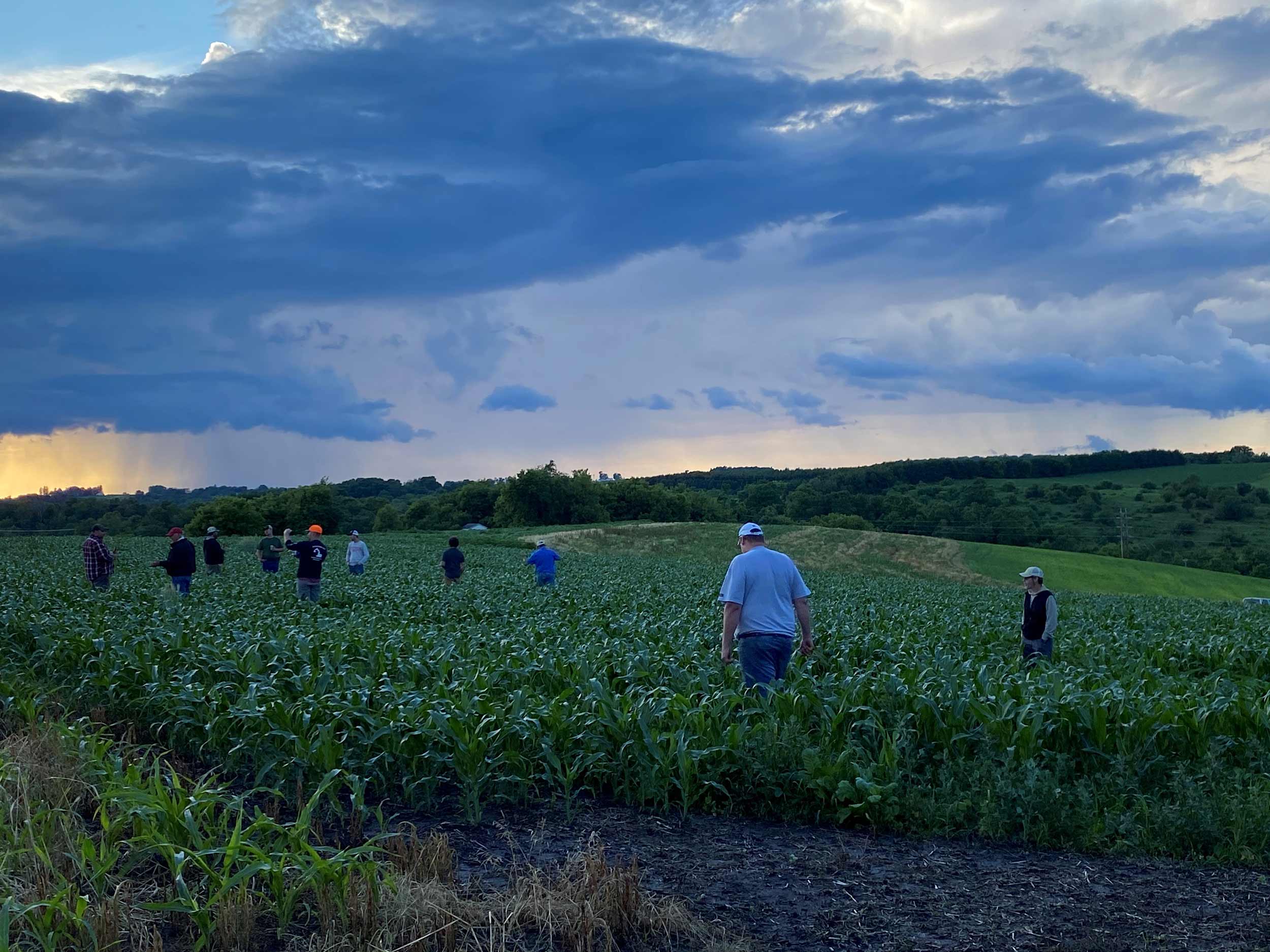
Together, these partners have engaged thousands of stakeholders, hosted dozens of field days and workshops, and published countless educational materials to raise awareness and build momentum.
Outcomes That Matter
The long-term commitment to the Boone River Watershed has yielded extraordinary results:
- 60 oxbows restored, with 25 more planned
- 57 fish species and 80 bird species documented using restored habitats
- Up to 62% nitrate reduction from tile-fed oxbows
- Hundreds of acres of floodwater storage created
- Thousands of farmers and landowners engaged
- National recognition, including the 2024 Endangered Species Recovery Champion Award
Perhaps most notably, the U.S. Fish and Wildlife Service has recommended down listing the Topeka Shiner from Endangered to Threatened, citing the success of restoration efforts in the Boone River Watershed as a key factor.
Looking Ahead
With nearly 400 potential oxbow sites identified in the watershed, the work is far from over. But thanks to the sustained investment from Fishers & Farmers Partnership, the Boone River program has the momentum, partnerships, and tools to continue scaling up.
“Without the support of the Fishers and Farmers Partnership, this program would not be what it is today.”
— Karen Wilke, The Nature Conservancy
The Boone River Watershed story is more than a conservation success—it’s a blueprint for how long-term collaboration, community engagement, and strategic funding can transform a landscape, protect endangered species, and build a healthier future for people and nature alike.
